
Summary
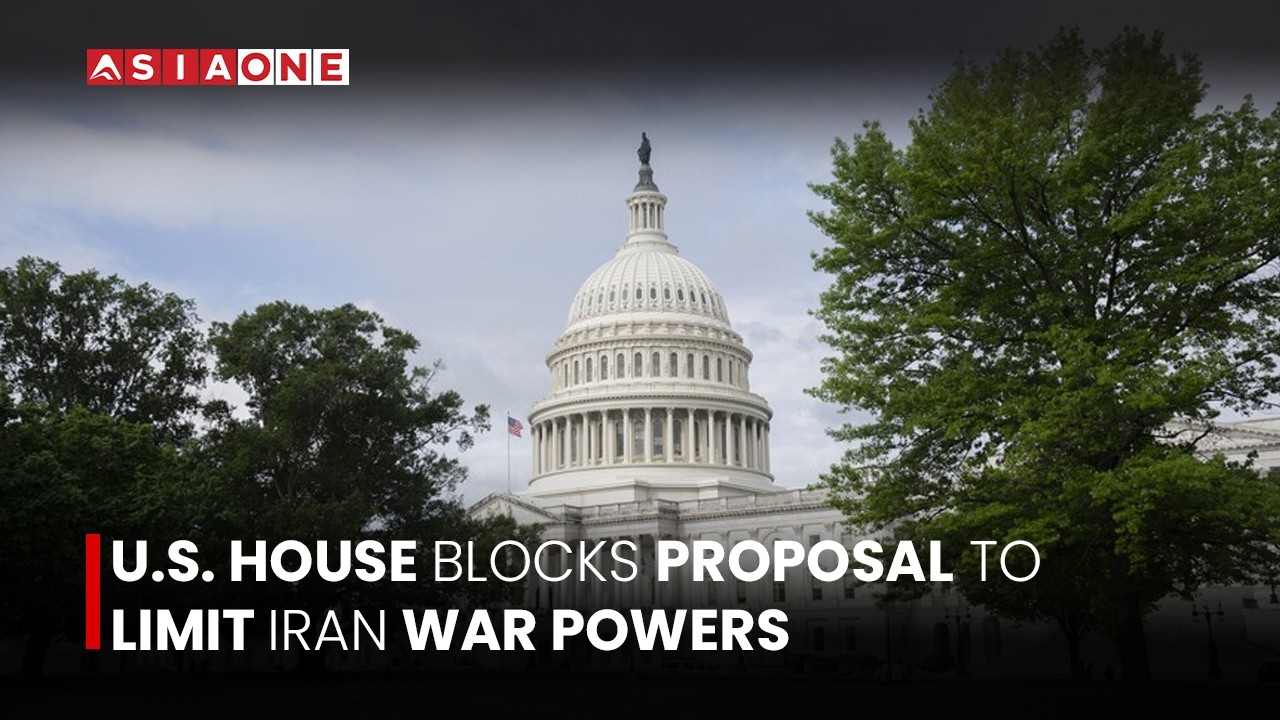
The **House of Representatives** has narrowly rejected a proposal to limit **President Trump**'s war powers in the ongoing conflict with **Iran**. The vote, which took place on April 16, 2026, saw **Republican leaders** manage to keep defections to a minimum, indicating that the party is not yet ready to publicly break with the **White House** on the war effort. This development comes as the conflict with **Iran** continues to drag on, with no clear end in sight. The proposal, which was introduced by **Democratic lawmakers**, aimed to restrict the president's ability to unilaterally authorize military action against **Iran**. The vote has significant implications for the future of the conflict and the balance of power between the **Executive** and **Legislative branches** of government. For more information on the conflict, see [[iran-conflict|Iran Conflict]] and [[us-foreign-policy|US Foreign Policy]]. The role of **Congress** in shaping **US foreign policy** is crucial, as seen in [[congressional-oversight|Congressional Oversight]].
Key Takeaways
- The House of Representatives rejected a proposal to limit President Trump's war powers in the conflict with Iran
- The vote was narrow, with Republican leaders managing to keep defections to a minimum
- The implications of the vote for the future of the conflict are uncertain
- The role of Congress in shaping US foreign policy is complex and evolving
- The US needs to consider the long-term implications of its actions in the conflict
Balanced Perspective
The vote on the proposal to limit **President Trump**'s war powers is a reflection of the deep divisions within the **Republican party** on the **Iran war**. While some lawmakers are eager to support the president's aggressive approach, others are more cautious and want to see a more nuanced approach to the conflict. The vote also highlights the ongoing debate about the role of **Congress** in shaping **US foreign policy**, with some arguing that lawmakers need to take a more active role in overseeing the **Executive branch**. The **US** needs to consider the **international law** implications of its actions, as discussed in [[international-law|International Law]]. The **UN Charter** and the **Geneva Conventions** provide a framework for understanding the **US**'s obligations and responsibilities in the conflict, as seen in [[un-charter|UN Charter]] and [[geneva-conventions|Geneva Conventions]].
Optimistic View
The rejection of the proposal is a positive development for the **Trump administration**, which can now continue to pursue its aggressive approach to the conflict with **Iran**. This could lead to a more decisive victory for the **US** and its allies, and potentially even a more stable Middle East. The **US military** has been effective in its campaign against **Iranian-backed militias**, as seen in [[us-military-campaign|US Military Campaign]]. However, some argue that this approach is too simplistic and ignores the complexities of the conflict, as discussed in [[middle-east-geopolitics|Middle East Geopolitics]]. The **US** needs to consider the long-term implications of its actions, including the potential for **blowback** and **unintended consequences**, as seen in [[blowback-theory|Blowback Theory]].
Critical View
The rejection of the proposal to limit **President Trump**'s war powers is a disturbing development that could lead to further escalation of the conflict with **Iran**. The **Trump administration**'s aggressive approach to the conflict has already led to significant human suffering and destabilization in the region, and the rejection of the proposal could embolden the president to take even more drastic action. The **US** needs to consider the potential for **regional instability** and the impact on **global security**, as discussed in [[regional-instability|Regional Instability]] and [[global-security|Global Security]]. The **US** should prioritize **diplomacy** and **international cooperation** to resolve the conflict, as seen in [[diplomacy|Diplomacy]] and [[international-cooperation|International Cooperation]].
Source
Originally reported by Politico